Personal Quote
-
Fast Access
-
Specialist Evaluation
-
Personalized Costs
-
Success Stories



Areola and nipple reduction surgery is a specialized plastic surgery procedure designed to improve the size, shape, symmetry, and proportion of the nipple-areola complex.
Some patients naturally have large or prominent areolas or nipples, while others notice changes following pregnancy, breastfeeding, weight fluctuations, hormonal changes, aging, or previous breast surgery.
At Blue Medical Plastic Surgery in Cancun, Dr. Jorge Uribe Kalafatic performs areola and nipple reduction procedures using techniques designed to create a more balanced and natural-
looking relationship between the nipple, areola, and breast.
Depending on the patient’s anatomy and goals, treatment may involve:
The procedure may be performed alone or combined with other breast procedures such as breast augmentation, breast lift, breast reduction, or gynecomastia surgery.
Areola reduction is a surgical procedure designed to decrease the diameter of an enlarged or stretched areola while maintaining a natural proportion with the breast.
During the procedure, the surgeon carefully marks the desired diameter of the new areola. A controlled amount of pigmented skin surrounding the areola is removed, and the remaining tissue is precisely sutured to create a smaller and more proportionate areola.
The objective is not simply to make the areola smaller, but to create a natural relationship between t
he areola, nipple, breast shape, and the patient’s overall anatomy.
Nipple reduction is designed to decrease excessive nipple projection, width, or overall size.
The surgical technique is selected according to the specific anatomy of the nipple and the amount of reduction required.
Because nipple
surgery may potentially affect sensation or structures involved in breastfeeding depending on the technique used, patients who are planning future pregnancies or breastfeeding should discuss this with their plastic surgeon before surgery.
The size and appearance of the nipple-areola complex can change throughout life.
Common contributing factors include:
In some patients, the areolas may also become stretched as breast volume changes over time.
Areola reduction surgery can be performed on both men and women.
When a patient does not feel comfortable with her body, especially during intimate moments, it dramatically affects self-confidence. Surgery offers a direct way to improve this aspect to improve emotional health.
This surgery can be performed on its own, in the doctor’s office under local anesthesia or you can also opt for a slightly deeper sedation in the operating room. It is common that it is also performed in combination with other surgeries that improve the appearance of the breasts in both breast augmentation, breast lift or breast reduction.
Areola and nipple reduction can provide long-lasting results.
However, the breasts and nipple-areola complex can continue to change due to pregnancy, breastfeeding, significant weight fluctuations, hormonal changes, aging, and changes in breast volume.
Maintaining a stable weight and following your surgeon’s postoperative recommendations can help preserve your results.
Areola reduction usually leaves a scar around the border of the areola.
Because the incision is positioned along the transition between the pigmented areola and surrounding breast skin, the scar may become less noticeable as it matures.
Scar appearance varies from patient to patient and depends on genetics, skin characteristics, healing, sun exposure, nicotine use, and postoperative care.
Scars typically continue to mature and fade over several months.
Areola reduction can be performed as an isolated procedure or incorporated into other breast surgeries.
Common combinations include:
When procedures are combined, the surgical technique, anesthesia, recovery, and risks may be different from those of an isolated areola reduction.
At Blue Medical Plastic Surgery, breast surgery is approached according to each patient’s individual anatomy rather than using the same measurements or surgical plan for every patient.
Dr. Jorge Uribe Kalafatic is a board-certified plastic surgeon with extensive experience in aesthetic, reconstructive, and breast surgery.
During your evaluation, the relationship between the breast, nipple, areola, skin quality, symmetry, and overall body proportions is carefully assessed to determine which procedure is appropriate for your goals.
Our approach focuses on:
You may be a candidate if you:
Age alone does not determine candidacy. Your anatomy, medical history, breast development, expectations, and future plans regarding pregnancy and breastfeeding should all be considered.
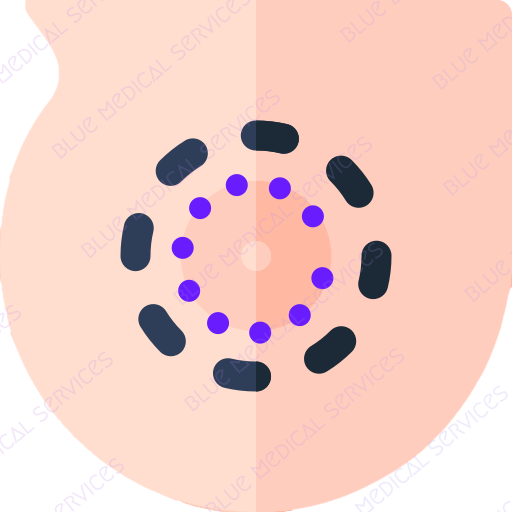
Areola reduction can often be performed as an outpatient procedure under local anesthesia. Sedation or general anesthesia may be considered when the procedure is combined with additional breast surgery.
The surgeon first carefully marks the desired diameter and shape of the new areola.
A ring of excess pigmented skin is then removed around the outer portion of the areola. The surrounding skin is brought toward the new areolar border and closed with fine sutures.
The technique is designed to reduce the diameter while preserving a natural shape and proportion.
For nipple reduction, the surgical markings are based on the amount of projection, width, or tissue that needs to be reduced.
Excess tissue is carefully removed and the nipple is reshaped according to the patient’s anatomy and desired proportions.
Fine sutures are used to close the incisions.
The exact technique varies depending on whether the objective is to reduce nipple projection, width, or both.
When performed as an isolated procedure, areola or nipple reduction can often be performed under local anesthesia.
Medication for relaxati
on may also be used when appropriate.
If areola or nipple reduction is combined with breast augmentation, breast lift, breast reduction, or another larger procedure, sedation or general anesthesia may be recommended according to the surgical plan.
An isolated areola or nipple reduction generally takes approximately one hour, although surgical time varies according to the treatment required and whether additional procedures are performed.
After surgery, protective dressings are placed over the treated area.
Your medical team will explain how to care for the incisions and provide instructions regarding medications, activity restrictions, bathing, sleeping position, and follow-up appointments.
Mild swelling, bruising, tenderness, and temporary changes in sensation can occur during the early recovery period.
Stitches will be removed 7 days after the procedure, while others will be reabsorbed after a couple of weeks.
Following areola or nipple reduction:
Your surgeon will provide individualized instructions according to your procedure and healing progress.
It is important that you follow your surgeon’s recommendations to get a good result.
Recovery after an areola reduction is usually manageable, although every patient may heal differently. It is important to follow all of your surgeon’s instructions and attend your scheduled follow-up appointments.
During the first few days, it is normal to experience:
You should take all of your medications exactly as prescribed by your surgeon.
It is recommended to rest, sleep on your back, and use a few pillows to keep your upper body slightly elevated and avoid direct pressure on the breasts.
It is also important to stay well hydrated and eat healthy foods rich in protein.
During the first week, swelling and bruising should gradually begin to decrease.
It is recommended to:
Changes in the size and shape of the areola can be appreciated from the beginning, although some swelling will still be present.
After a few weeks, you may notice a slightly firm area around the incisions. This can be part of the normal healing process.
Temporary changes in sensation or small sensations similar to electric shocks may also occur while the tissues and nerves recover.
During this stage, swelling continues to decrease and the appearance of the areolas begins to look more natural.
You should continue following the exercise and activity restrictions indicated by your surgeon.
During the first few months:
It is important to continue attending all follow-up appointments so your surgeon can evaluate your healing progress.
The final result is usually more clearly appreciated between 3 and 6 months, when most of the swelling has resolved and the internal scars begin to soften.
Although good results are expected, it is important to remember that no surgical procedure can guarantee a specific outcome and, in some cases, an additional procedure or revision may be necessary.
To support proper healing:
Choosing an Experienced, Board-Certified Plastic Surgeon and actively following the recovery process are essential for promoting a good surgical outcome.
As with any surgical procedure, areola and nipple reduction involves potential risks.
Possible complications may include:
The specific risks depend on the procedure performed, the patient’s anatomy, medical history, and healing characteristics.
Choosing an appropriately qualified plastic surgeon and carefully following preoperative and postoperative instructions are important components of surgical safety.

 AFTER
AFTER
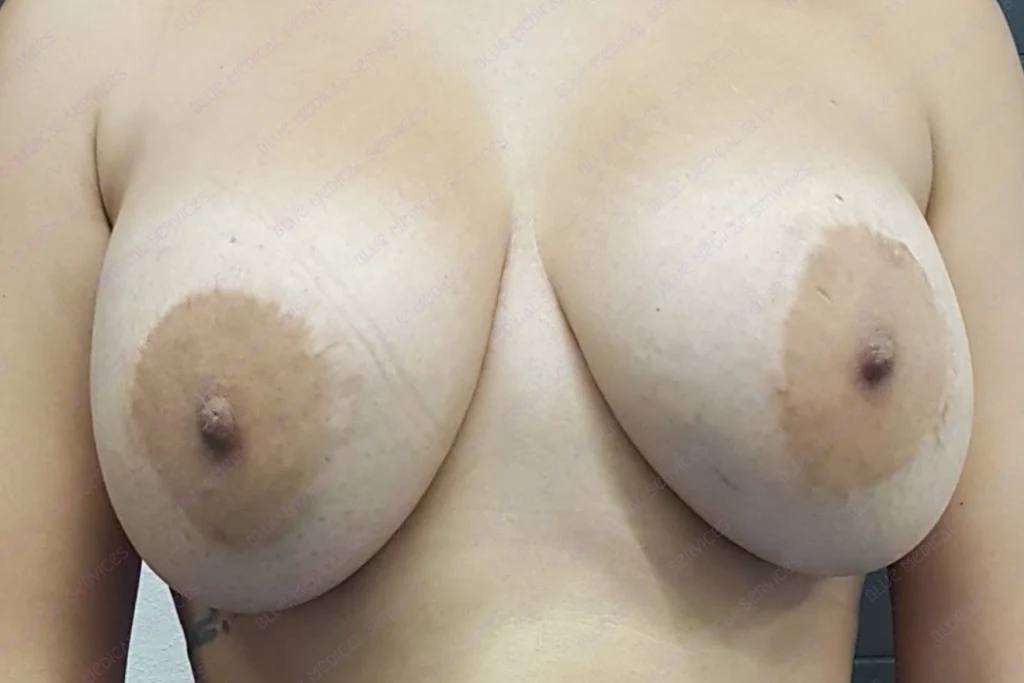 BEFORE